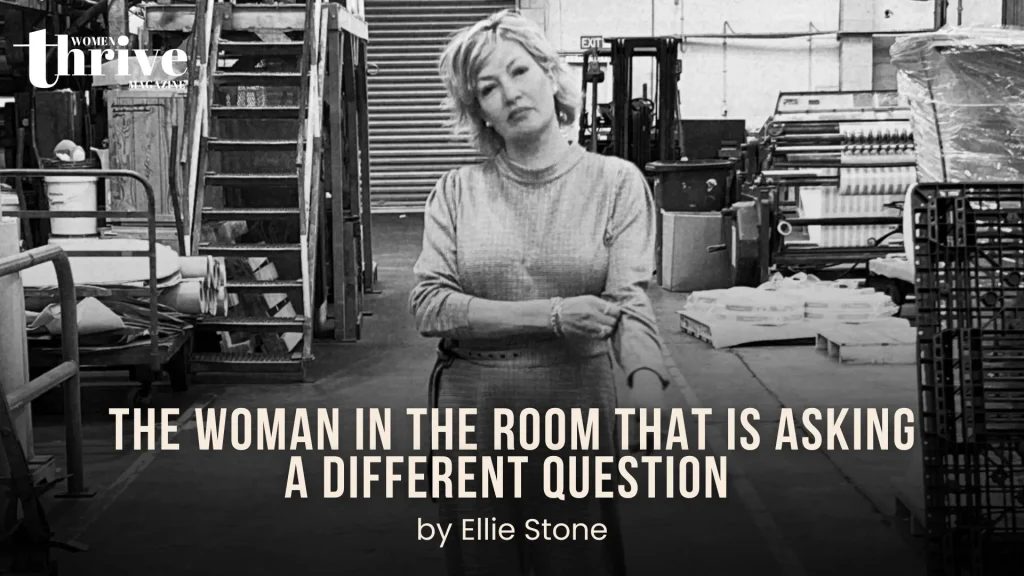
She loves being a woman. She loves working with men.
And what Ellie Stone has seen working alongside them has shaped two ideas for real, structural change. What matters to her now is changing some of the systems around work, justice and second chances are actually helping the people they were designed to serve.
Ellie is halfway through a PhD and wondering whether she needs the title at all.
It came up during a conversation with one of her lecturers. She had two possible thesis directions and, being Ellie, her initial response was that she wanted to do both. Her lecturer challenged her. She was already running a successful business and seeing the impact of decisions made far beyond the workplace. What, he asked, was she actually hoping to achieve by completing her PhD?
It made her think. “I’m not after titles,” Ellie says. “I don’t want people to call me Doctor.”
She cares far more about whether the work leads somewhere useful.
Born in Iran and now based in New Zealand, Ellie has built her career largely in industries where most of the people around her are men. She knows what it means to be a woman in those environments, but she isn’t especially interested in making that the story.
What interests her now is what she has learned by being there.
When Work Doesn’t Feel Like Progress
One issue has been bothering Ellie for some time.
She works with men earning relatively modest incomes and has watched what happens when someone moves into employment. At first, there is relief. They have a job, regular income and the possibility of getting ahead. Then reality catches up.
Tax is deducted. There may be child support, student loan repayments and other financial obligations. Ellie says she has seen workers reach the point where they look at what is actually left and wonder whether they are any better off.
“If we want people to work then employment needs to feel worthwhile,” she believes.
Ellie isn’t suggesting people shouldn’t pay tax or meet their financial responsibilities. Nor does she claim to have a ready-made answer. She wants the numbers examined properly.
Could things be structured differently for people on the lowest incomes? Is there a way of helping people establish themselves in work without immediately feeling as though every extra dollar disappears somewhere else?
Part of her frustration comes from seeing the situation up close. These aren’t statistics on a spreadsheet. They’re people who turn up to work, do their jobs and go home to families trying to make everything add up.
“We talk a lot about getting people into employment,” Ellie explains. “I think we need to look just as closely at what happens once they get there.”
What Happens After Someone Has Served Their Sentence?
There is another issue Ellie wants to bring into the conversation, and it comes directly from seeing people try to find work and rebuild their lives after serving a sentence.
She believes employment can be an important part of giving someone a genuine second chance. A job brings more than an income. It can provide routine, responsibility and a way back into everyday life. But Ellie has also seen how difficult that second chance can be to get.
She calls it “white punishment.” It is the subject she has been exploring through her university work and her term for the punishment that can continue long after the sentence itself has been served. Someone may have gone through the justice system, completed their sentence and be ready to move forward. Then they apply for a job and their past comes straight back into the room.
Ellie has seen employers initially willing to give someone an opportunity, only to search their background and reconsider. She understands why employers sometimes need access to criminal history. Depending on the role and the offence, there may be very good reasons for knowing someone’s background. What she questions is how long that history should continue to define someone, and who should have access to it.
Her concern isn’t about removing accountability. It is about what a second chance actually means if, after serving the punishment imposed on them, people continue to be punished socially and professionally for years afterwards.
She also thinks about the families involved. “Children and partners can live with those consequences too,” she explains. “Accountability and second chances shouldn’t have to cancel each other out.”
Why a Man’s World Suits Her
The headline about Ellie could read. ‘Iranian woman comes to New Zealand, builds a business and succeeds in industries dominated by men.’ But that wouldn’t quite capture the world she has chosen to work in.
“If I was born again, I would love to be born female again,” she says. “I enjoy being female. I love it. I love being feminine and also being strong.”
Working predominantly with men has also been a choice. “I think dealing with men is always easier,” she says. It’s an opinion she knows not everyone will share, but it comes from her own experience. Now in her late fifties, Ellie says some of the most difficult experiences and relationships in her life have been with other women.
“I have been hurt in my life by women a lot more than men” she says. Then comes the rather provocative addition with a smile on her face: “Sometimes I think life could be a better place if we just had men. Generally, men are easier to deal with.” It is perhaps an unexpected thing to hear from a woman being profiled in a women’s magazine, but that’s also why it belongs here.
Supporting women doesn’t require pretending every experience between women is positive. Nor does being successful in a male-dominated industry have to mean spending your career fighting the men around you. Ellie’s experience has largely been the opposite, and very positive.
She says that working closely with men has also given her a perspective on some of the pressures affecting them. She can understand the barriers women face while recognising that some men, particularly those on low incomes or trying to rebuild their lives, are struggling within the same systems. For Ellie, it isn’t about taking sides, but looking closely at what actually works.
Seeing Things Through a Different Lens
Growing up in Iran before building a life in New Zealand has shaped the way Ellie sees things. “Living across different cultures teaches you that what one country considers normal may be done very differently somewhere else. It also gives you a close-up view of how much systems matter.”
Policy can sound remote when it is discussed in universities or government offices. In everyday life, it becomes much more practical. It determines what someone takes home from work. It can influence whether an employer says yes or no. It can make starting again easier or considerably harder. Perhaps that is why Ellie keeps coming back to impact.
She still values her PhD studies and the research behind them, but she doesn’t want what she learns to remain inside a thesis relatively few people will ever read.
She wants to write about these ideas, talk about them and put them in front of people who may see something they hadn’t considered before.
She may finish the PhD. She may eventually add “Dr” in front of her name. But that was never really the point for her.
For Ellie, success will be much simpler to measure.
Did anything change?
Name: Ellie Stone
Bio: Ellie Stone is the Founder and Director of MCNZ Group, with over 20 years’ experience in management, strategic planning and community development. Originally from Iran, she has lived in New Zealand since 1997. Ellie is passionate about creating employment opportunities, supporting marginalised communities and helping people overcome barriers through meaningful work, personal growth and social impact.
Social Media Handles: